
The concierge MVP for digital brands: validate demand before you automate
A concierge MVP lets you sell and deliver a digital offer manually before building software, content systems, or automation around unproven demand.
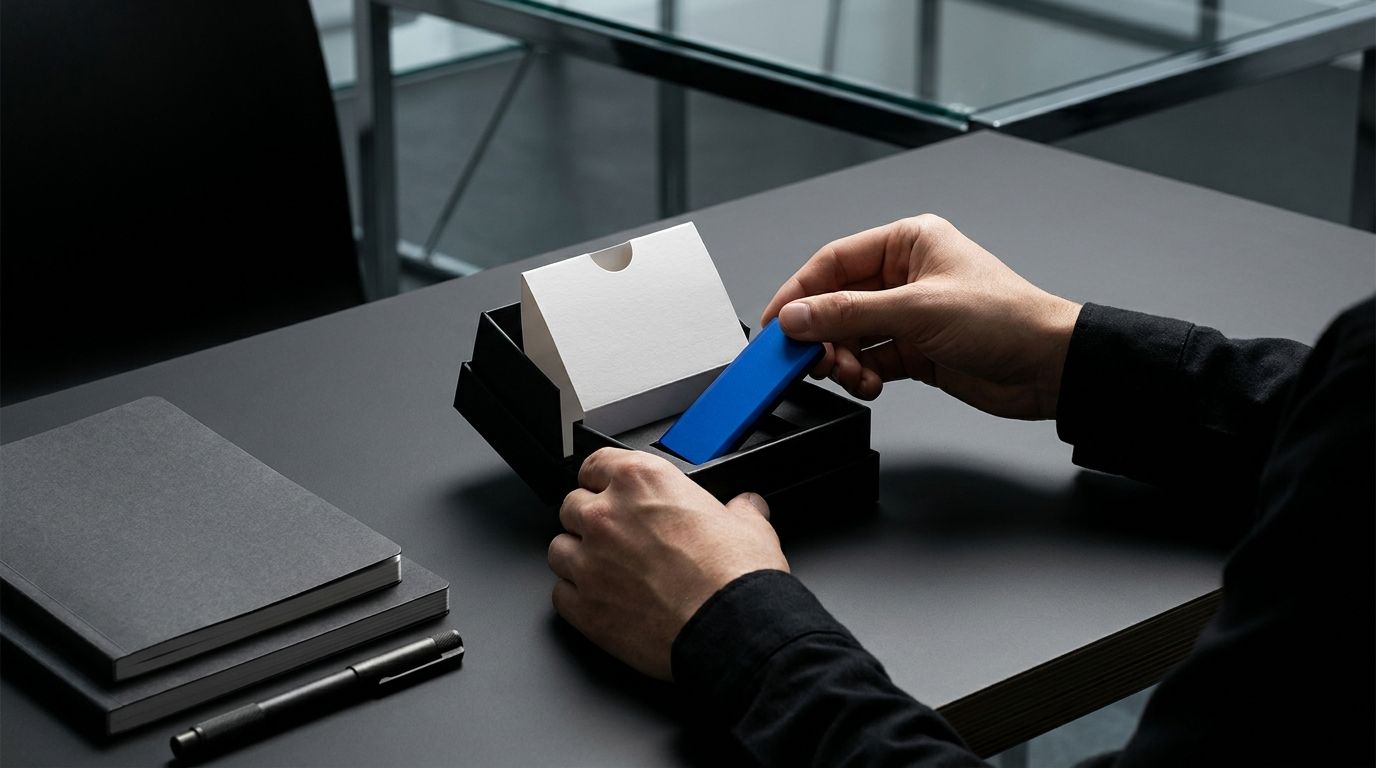
Here's what most founders get wrong about validation: they build first and sell second, then wonder why nobody shows up. A concierge MVP flips that. You sell the result manually to a small group of real buyers before you spend a single hour building the machine behind it.
For solo founders, this is often the fastest form of digital brand validation. You learn whether people will pay, what they actually want, and where delivery breaks before an app, course library, newsletter engine, or content system makes the wrong assumptions expensive.

The point is not to pretend manual work is a finished product. The point is to create a small, paid version of the promised outcome and watch what customers do.
What a concierge MVP actually tests
A concierge MVP is a service delivered manually to a small group of customers, often with ordinary tools behind the scenes. The customer receives a useful result. You handle the work that software might handle later.
That distinction matters. A landing page tests interest. A waitlist tests willingness to leave contact details. A paid concierge MVP tests whether someone will exchange money, time, or access for the outcome you actually promised.
For a digital brand, the manual service might look like:
- A weekly meal plan made for one household instead of generated by software
- A founder's content calendar built by hand instead of produced by a publishing workflow
- A custom travel research pack assembled from public sources instead of delivered through a searchable database
- A personal finance review completed in a spreadsheet instead of inside a dashboard
Marcus, a solo founder in Austin, could build a budgeting app for freelancers. That would take months. A concierge MVP lets him sell a $49 monthly money review to ten freelancers first. Each customer sends income, expenses, and a short question. Marcus returns a plain-language review within 48 hours.
He is not only testing the budget template. He is testing the problem, price, turnaround time, trust level, and repeat demand.
Here's the part most people miss: the conventional advice is to automate as soon as possible. Sounds efficient. But it hides the real problem, which is that founders automate a workflow before they know whether that workflow produces a result anyone values. Automation can make an unwanted offer run faster. It cannot make that offer wanted.
So the deeper lesson is simple: your concierge MVP should test the promise, not just the process.
Choose one painful promise
A weak concierge MVP starts with a broad audience and a pile of features. A stronger one starts with one person, one situation, and one visible result.
Take Lena's idea for a digital brand serving independent therapists. She could say, "I help therapists grow online." Too wide to sell or deliver consistently. A tighter promise: "I turn one recorded therapy education session into four compliant educational posts within five days."
The second version gives her a clear customer, input, output, and deadline. It also gives her something to test without building a platform.
Write the offer in this format:
- You help a specific buyer
- In a specific moment of frustration
- Produce a specific result
- Within a specific time frame
Then remove anything that does not support the result. No member portal. No dashboard. No ten-part resource library. No elaborate welcome sequence. Your early buyers do not care how much infrastructure you imagined at 1:00 a.m. They care whether the promised outcome arrives.
A useful concierge MVP promise has four traits:
- The buyer can understand it in one sentence
- You can deliver it with tools you already have
- The result appears within days or weeks, not a vague future
- The buyer can tell whether it helped
Use a short interview before you sell. Ask what they do now, what they tried, what it cost, and what happens if the problem remains. Do not ask, "Would you use this?" People are generous with imaginary futures. Ask what they paid for last time, or what they did yesterday.
For digital brand validation, behavior beats compliments. A reply that says "interesting" is a signal. A payment, calendar booking, data export, or referral is stronger evidence.
Sell the manual version before building it
You do not need a finished website to sell a concierge MVP. You need a clear offer, a way to collect payment, and a delivery path you can explain without hand gestures.
Omar tested a digital brand for local restaurant owners in Chicago. His proposed product would monitor reviews and suggest responses. Instead of building the monitoring tool, he offered five restaurants a two-week review response service for $150. Restaurant owners forwarded new reviews to a shared inbox. Omar drafted responses and returned them within one business day.
He learned that owners did not mainly want faster writing. They wanted responses that sounded calm when a customer was angry and did not create legal or reputation problems. That finding changed the future product before he wrote a line of code.
Your sales page can be one page or one well-written message. Include:
- The specific problem you solve
- The exact manual deliverable
- The price and payment terms
- The time required from the buyer
- The delivery date
- The limit on early customers
Do not hide the manual part. Say that the service is an early version and that you are working directly with a small group. That framing gives buyers a reason to share useful feedback, while the limit protects your time.
Charge from the beginning when the offer has a real outcome. Free users can provide helpful comments, but paid users reveal a harder truth: they have decided the result is worth more than the money they kept.
Price does not need to be perfect. It needs to be real enough to create a decision. If your eventual offer may cost $300, do not validate it with a free trial that attracts people who would never pay. You can offer a lower founder price, but state the expected future range.
What I'm telling you is that a manual sale is not a lesser launch. It is the shortest route to contact with the actual problem.
Deliver the result like a small production line
Once people pay, treat delivery as a series of visible steps. Do not rely on memory, especially when you are testing several brands at once and your brain has started storing tasks in the same drawer as old receipts (and yes, that is exactly as chaotic as it sounds).
Create a simple delivery board with columns such as:
- Paid and waiting for customer input
- Input received
- Work in progress
- Review needed
- Delivered
- Follow-up due
Track the time spent on every order. Record questions that repeat. Save the language customers use when they describe the result. Note where customers pause, disappear, or ask for something outside the offer.
The manual process should reveal demand and delivery facts such as:
- How long one order takes from payment to completion
- Which customer inputs are necessary
- Which steps create rework
- Which parts customers value enough to mention unprompted
- Whether customers return, refer someone, or ask for a next purchase
Suppose Elena is testing a digital brand that creates launch copy for independent consultants. She manually reviews a 30-minute customer interview, writes a positioning statement, produces a homepage draft, and records a short explanation of the choices. After four projects, she notices that the positioning statement gets praised, while the homepage draft usually needs two revisions.
That is useful data. She may automate intake and draft generation later, but she should not automate the review stage until she understands the quality bar. Manual work shows where judgment still matters.
Set a delivery limit before accepting customers. If each order takes four hours and you can protect eight hours per week, sell two orders per week. A concierge MVP is not permission to create a job you resent. It is a controlled test with a clear capacity ceiling.
With Zentoko's review-first drafting and per-brand voice controls, you can keep the early process organized while still approving what gets published. The system supports the work. It does not decide whether the offer deserves to exist.
Measure evidence, not activity
A concierge MVP can generate plenty of motion. Messages get sent. Calls get booked. Spreadsheets fill up. None of that proves demand by itself.
Create a small evidence table for each test. Track the source of each lead, the offer shown, the price, the time to close, delivery time, result, and next action. You need enough structure to compare one test with another without turning the experiment into a research department.
Useful signals include:
- Paid conversion rate from qualified conversations
- Completion rate after payment
- Delivery time per customer
- Repeat purchase or renewal rate
- Referral rate
- Refunds, cancellations, and stalled inputs
- Customer language that describes the value
If ten qualified prospects hear the same offer and two pay, that is a 20% paid conversion rate within that small sample. Not a market forecast. Evidence that the offer deserves another test.
If six customers buy but four do not complete the intake, you have a delivery problem or a promise problem. If customers complete the process, use the result, and ask for another order, your signal is stronger.
Set a decision rule before the test starts. For example: continue if five customers pay, at least four complete delivery, and two ask for a second engagement. Pause and rework if fewer than two qualified buyers pay after twenty direct conversations.
Do not confuse reach with demand. A post with 40,000 impressions and no paid action may have a message, audience, or trust problem. A small email list that produces three paid orders may be more valuable for your next decision.
The mistake most founders keep making is treating every positive response as proof. A compliment is not a sale. A sale is not retention. Retention is not profit. Keep those signals separate.
Decide what to automate, and when
Automation should arrive after you can explain the manual workflow and the customer result. You do not need to wait for perfection. You do need repeated evidence that the same work happens often enough to justify a system.
A practical automation order looks like this:
- Automate intake when customers provide the same information repeatedly
- Automate sorting when requests follow clear categories
- Automate draft production when quality can be checked against examples
- Automate delivery when the output is stable and low risk
- Keep human review where judgment, trust, or customer context still matters
Return to Lena's therapist content service. After twenty deliveries, she may use a form to collect the recording, audience, topic, and compliance constraints. She may use AI to create draft variations. She should still review claims, tone, and sensitive wording before delivery.
Omar's review service may justify alerts when a new review appears, but response approval can remain manual until he knows which situations need escalation. Marcus may automate expense categorization while keeping the monthly money review personal, because customers pay for interpretation, not data entry.
Use a simple readiness test. Automate a step only when:
- The step repeats across at least ten customer orders
- You can describe what a good output looks like
- Errors are easy to catch before the customer sees them
- The time saved is worth the setup and maintenance
- Automation will not weaken the part buyers value most
This is where a lot of digital brands go sideways. The founder builds a polished workflow and then discovers that customers wanted a different result entirely. Keep the system small until the evidence gets boring. Boring is good. It means the pattern is clear.
Build the smallest repeatable engine, not the biggest possible product. Your first automation should remove a bottleneck, not decorate an uncertainty.
Turn the test into a launch decision
At the end of the concierge period, schedule one honest review with yourself. Use the numbers and customer language, not the emotional weather of the week.
Ask:
- Did people pay without heavy persuasion?
- Did the promised result arrive on time?
- Did customers describe the value in words you can reuse?
- Did the work become faster or more predictable with repetition?
- Did anyone return, refer someone, or ask for a related offer?
- Can the price support the time and tools required?
You have three reasonable decisions. Continue manually if demand exists but the workflow still needs judgment. Productize the service if customers want the result and the steps are becoming repeatable. Stop or reposition if people like the idea but avoid paying, completing intake, or returning.
Stopping is not wasted work. You bought information before buying software, contractors, and months of maintenance. That is a good trade.
A concierge MVP also helps you choose the right brand shape. Perhaps the original idea was a self-serve course, but customers keep paying for reviews. Perhaps the planned subscription should be a one-time audit. Perhaps the audience is not the group you started with. Let the paid behavior move the brand.
For a solo founder, the best next step is usually unglamorous: run another ten sales conversations, deliver another five orders, and compare the evidence. Then update the offer, price, and workflow in writing.
Your next action is simple. Pick one digital brand idea and write a one-sentence manual offer today. Name the buyer, the result, the delivery time, and the price. Sell it to five real prospects before you build the portal, database, or automation.
The tool should remove the reasons you keep not shipping. It should not give an untested idea a more expensive costume.
FAQ
What is a concierge MVP?
A concierge MVP is a paid, manually delivered version of a product or digital service. It tests whether customers want and will pay for a specific outcome before you build software or automate delivery.
How is a concierge MVP different from a standard MVP?
A standard MVP often includes a small working product that customers use directly. A concierge MVP delivers the result through founder-led or team-led work behind the scenes, which lets you learn the workflow before turning it into a product.
How many customers do I need for digital brand validation?
Start with five to ten paying customers for a focused test, then look for repeated behavior rather than a magic sample size. Track payment, completion, delivery time, repeat demand, referrals, and refunds.
Should I charge for a concierge MVP?
Yes, when the offer promises a useful business or personal outcome. Payment gives stronger evidence than survey responses or free signups, though you can use a clearly stated founder price while testing.
When should I automate a concierge MVP?
Automate after the workflow repeats, the quality standard is clear, and errors are easy to catch. Keep human review for steps involving judgment, trust, sensitive information, or customer-specific decisions.
Join the conversation
Subscribe to comment
Join the Ziggyloo family newsletter to leave a comment — and get gentle learning tips and community stories in your inbox. No spam, unsubscribe anytime.