
How to build a pre-sell landing page that tests demand before you build
A practical guide to building a pre-sell landing page, measuring real buying intent, and learning whether your product idea deserves your time.
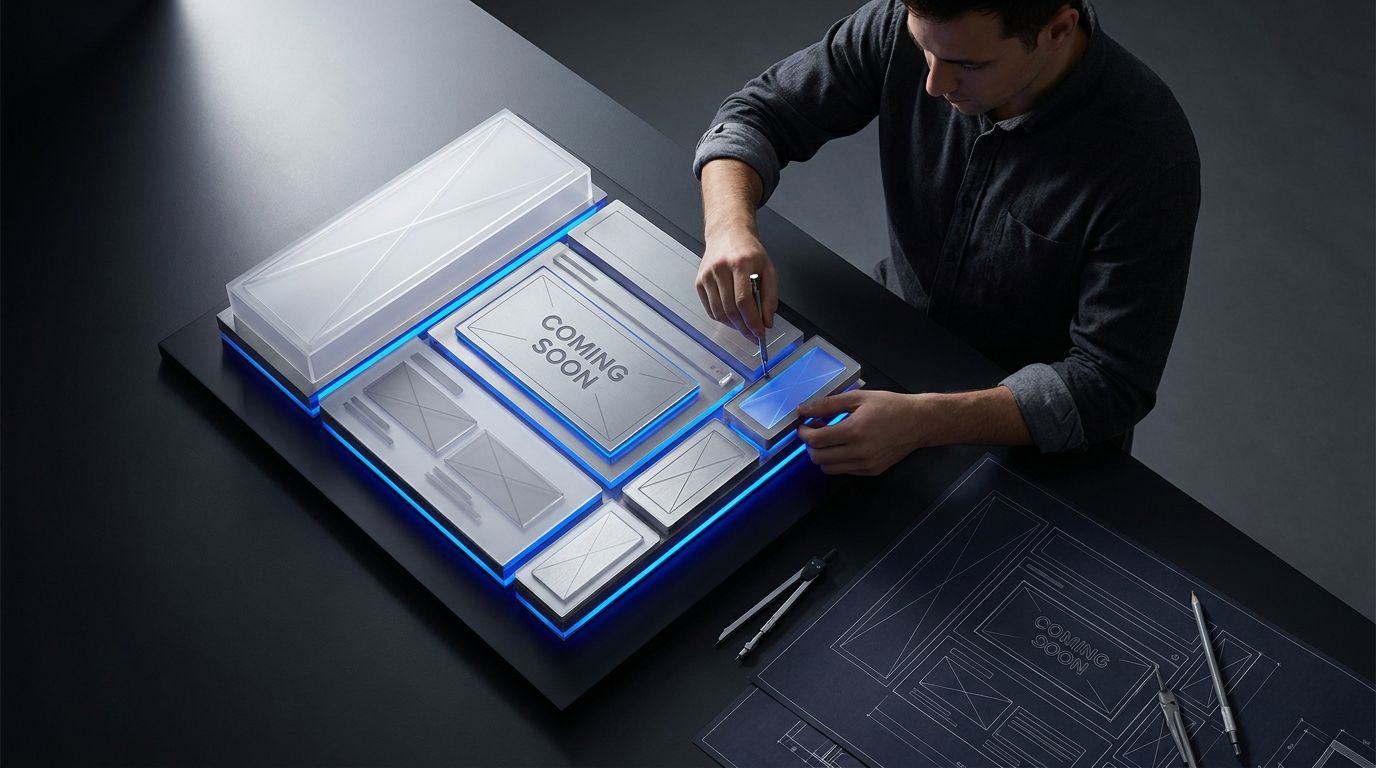
Elena had a product idea open in one browser tab and a half-finished spreadsheet in another. It was 10:47 p.m., her coffee had gone cold, and she was debating whether to spend the next six weeks building something people might politely compliment but never buy.
A pre-sell landing page would've answered the more useful question first: will anyone commit to this offer before it exists? To test product demand, you do not need a finished product, a perfect brand, or a large audience. You need a clear promise, a believable buying path, and a way to observe real behavior.

That distinction matters because interest is cheap. People will click a poll, save a post, and tell you an idea sounds useful. Fewer will enter an email, book a call, place a refundable deposit, or pay for early access. Your job is not to collect compliments. Your job is to learn what people will do.
Start with the promise, not the product
A pre-sell page is not a miniature version of the website you plan to build. It is a focused test for one offer. The page should help a specific person understand what changes for them, why your offer may help, and what happens if they take the next step.
So write the promise before you choose colors, illustrations, or a clever name. The promise is the sentence a visitor repeats to someone else after leaving the page.
Use this working formula:
- I help [specific audience] achieve [specific outcome] without [frustrating tradeoff].
- You get [clear deliverable] within [reasonable timeframe].
- This is for you if [recognizable situation or problem].
- The next step is [specific action with low confusion].
Suppose you want to sell a weekly meal-planning service for solo parents with packed evenings. "Make family life easier" is kind but blurry. "Get five weeknight dinner plans with a grocery list every Sunday, built for 30-minute cooking windows" gives someone a reason to pay attention.
The offer may change later. Fine. At this stage, you are testing whether the problem feels urgent enough and the proposed result feels useful enough.
What should a pre-sell page promise?
It should promise an outcome you can explain and eventually deliver. Avoid claims that depend on a visitor guessing what you mean. "Feel more organized" asks them to do too much interpretation. "Know what to cook by 5 p.m. without opening six recipe tabs" gives them a scene they recognize.
Write down these details before you touch the page:
- Who has the problem right now?
- What are they trying to do?
- What keeps getting in the way?
- What will you provide first?
- What evidence makes the offer believable?
- What will you ask them to do today?
Keep the first version small. A narrow promise often teaches you more than a broad one because the right visitor can recognize themselves quickly. Nobody needs another grand platform for everyone with a dream and a Wi-Fi connection.
Build the page around a buying decision
Your page needs enough information for a visitor to decide whether to continue. It does not need every detail of the future product. Think of the page as a conversation that answers the questions already forming in their mind.
A useful pre-sell landing page usually includes:
- A headline that states the audience and outcome.
- A short explanation of the problem in familiar words.
- A description of what the buyer receives.
- A clear price or price range, if you are asking for money.
- A reason to believe the offer can work.
- A direct call to action.
- A note about timing, access, refunds, or what happens next.
Put the headline and call to action near the top. If a visitor has to scroll through your origin story before finding out what you sell, the page is asking for patience before it has earned trust.
Your headline might read: "A weekly content plan for solo founders running niche brands." The supporting copy could explain that the buyer receives one focused campaign idea, channel adaptations, and a publishing schedule every Monday. The page does not need to claim that the system will transform their whole business. It needs to make the first result easy to picture.
Then show the shape of the offer. If you are selling a workshop, name the session length, format, and takeaways. If you are selling a template pack, show the type of templates and the job each one handles. If you are selling a service, explain the first delivery and the boundary around revisions.
Specifics reduce the mental work required from the buyer. They also reduce your own risk, because vague offers are difficult to fulfill and difficult to evaluate.
Should you include a price before the product exists?
Yes, when you want to test willingness to pay rather than general interest. A price makes the decision real. It may lower conversion, but that drop gives you information that an email signup cannot.
You can choose from several forms of commitment:
- A paid pre-order for a defined first version.
- A refundable deposit that reserves a place.
- An application followed by a payment conversation.
- An email signup for a specific launch date.
Each option measures something different. A paid pre-order is the strongest signal, but it creates an obligation to deliver or refund. An email signup is easier for visitors and useful when you are still shaping the offer, but it is a softer signal.
Never hide the fact that the product is in development. Say what exists now, what is planned, and when the buyer will receive access. If you collect money, explain the refund terms in plain language. Trust is not decoration on the page. It is part of the offer.
Drive the right traffic and read the behavior
A page cannot test demand if nobody who has the problem sees it. You do not need a massive launch. You need visitors who resemble the people you plan to serve.
Start with places where the problem already appears. That might be a founder community, a specialist newsletter, a search query, a direct message to a past customer, or a small group of people who have described the problem in public. Share the same promise in each place so you can compare reactions without changing five variables at once.
For a first test, track a small set of actions:
- Page visits from each source.
- Clicks on the main call to action.
- Completed forms or checkout starts.
- Paid orders, deposits, or booked conversations.
- Replies that explain hesitation or urgency.
A high click rate with no signups often means the message creates curiosity but not enough trust or value. A low click rate may mean the audience does not recognize the problem, the promise is unclear, or the traffic source is wrong. A few paid orders from a small, relevant group can teach you more than hundreds of casual visits.
Do not rush to assign a universal conversion target. A page selling a $19 template and a page asking for a $1,500 service deposit have very different decision costs. Compare your results against the behavior you need to support, not against a random screenshot somebody posted online.
What counts as real demand?
Real demand is behavior that costs the visitor something. That cost might be money, time, access to their calendar, or a direct explanation of their problem. The more effort your offer requires, the more meaningful that action becomes.
Look for signals such as:
- Someone asks when they can start.
- Someone pays after reading the terms.
- Someone introduces you to a person with the same problem.
- Someone explains what would make the offer an easy yes.
- Someone returns to the page and takes the next step.
A "sounds interesting" reply is not useless. It gives you language and may reveal a need. It is simply not the same as demand. Hold both truths at once. People can like your idea and still not need it badly enough to buy.
Keep a simple test log. Record the traffic source, the version of the headline, the call to action, the number of meaningful responses, and what people said in their own words. After a week, you should be able to see whether the problem is the audience, promise, proof, price, or next step.
Learn from hesitation before you build
The most useful feedback often arrives as a pause. A visitor reads the page, clicks nothing, and disappears. Someone joins the waitlist but never replies. A prospect says, "Maybe later." These moments can sting, especially when you have already imagined the finished product in suspiciously high detail.
Treat hesitation as a question, not a verdict. Ask what the visitor needed to believe before taking the next step.
Common friction points include:
- The buyer does not feel the problem is urgent.
- The result sounds pleasant but not valuable.
- The page does not explain what they actually receive.
- The price arrives before trust has formed.
- The next step feels risky or unclear.
- The offer is aimed at too many people at once.
Improve one friction point at a time. Rewrite the headline if people misunderstand the outcome. Add a sample deliverable if they cannot picture the result. Add a short founder note if the page feels anonymous. Adjust the price only after you understand whether people want the offer at all.
How do you validate a product idea without building it?
Describe the smallest useful version, invite a real commitment, and speak with the people who hesitate. Then compare what they say with what they do. This process validates the problem, promise, buyer, and price before you spend heavily on production.
Keep the first delivery deliberately manual when possible. If you are testing a planning tool, deliver the plan by email. If you are testing a research service, create the report yourself. If you are testing a course, run a live session before recording twelve modules.
Manual delivery is not a failure of the product. It is how you learn what the product must actually do. You may discover that buyers care about the weekly review, not the dashboard, or they want examples for one narrow situation instead of a large library of content.
When people pay, deliver what the page promised. Ask what felt useful, what felt confusing, and what they expected to happen next. Keep the questions open enough for surprise, but focused enough to guide a decision.
Decide what happens after the test
A test needs a decision rule before the results arrive. Otherwise, every outcome becomes an excuse to keep going. No signups becomes "the audience needs more time." One enthusiastic reply becomes "we are definitely onto something." Founders are remarkably creative when defending a project they have already emotionally adopted.
Choose your next move based on the evidence:
- Continue when the right people take the intended action and the offer is deliverable.
- Adjust when visitors understand the problem but hesitate around the promise, price, or format.
- Pause when the audience is wrong, the problem is mild, or no one takes a meaningful next step.
- Run a smaller conversation test when the page gets too little relevant traffic to support a decision.
Set a time window. Seven to fourteen days is enough for a focused first test if you already know where to find relevant people. Define the minimum result that would justify building the first version. That could be five paid pre-orders, ten qualified calls, or a pattern of repeated requests from a narrow audience.
The threshold should reflect your available time and the cost of building. If the product would take two months, an enthusiastic comment should not be enough to proceed. If the first version takes one afternoon, a smaller signal may justify a low-risk experiment.
Your prelaunch marketing should also end with a next step for people who are not ready. Offer a useful email, a short interview, or a way to hear when the first version is available. Do not turn every no into a chase. A respectful follow-up protects the relationship and gives the buyer room to decide.
With Zentoko's launch system, you can keep the offer, page copy, feedback, and publishing workflow connected as you test. The tool is not the validation. Your page and the behavior it produces are the validation. The system simply makes it easier to learn without scattering your notes across twelve tabs.
FAQ
What is a pre-sell landing page?
A pre-sell landing page presents an offer before the full product is built and asks visitors to take a meaningful next step. That step can be a payment, refundable deposit, application, booked call, or focused waitlist signup. The page tests whether the promise attracts the right buyer before you invest in production.
How long should a pre-sell landing page be?
It should be as long as needed to answer the buyer's practical questions and no longer. Most early tests need a clear headline, problem, outcome, offer details, price or commitment, proof, timing, and call to action. Remove background information that does not help someone decide.
Should I charge money during product validation?
Charge money when you want to test willingness to pay and can clearly describe what the buyer will receive. A paid pre-order is a strong signal, but you must explain delivery timing and refund terms. If the offer is still too uncertain to define, start with a qualified call or specific waitlist instead.
What should I do if nobody signs up?
Do not build yet. Check whether the right people saw the page, whether the problem feels urgent, and whether the offer is specific enough to understand. Speak with a few relevant visitors, revise one part of the page, and run a smaller test before making a larger commitment.
You are not behind because you want proof before you build. You are protecting your time, your money, and the part of you that has already started picturing the launch announcement.
Make the page small. Make the promise clear. Ask for a real next step, then let the response teach you what to do. A quiet result is still a result, and it can save you from building a very polished answer to the wrong question.
Join the conversation
Subscribe to comment
Join the Ziggyloo family newsletter to leave a comment — and get gentle learning tips and community stories in your inbox. No spam, unsubscribe anytime.