
From drafts to published: a workflow for managing 5+ brands without losing your voice
When you run 5+ brands, your drafts start sounding the same. Here’s a multi-brand workflow that protects brand voice and ships on schedule.

Elena was halfway through her second coffee when the Slack pings started. Not for one brand. For four.
She opened three drafts at once, skimmed the first paragraph of each, and stopped. They all sounded like her generic "founder voice," not like the brands she built. She closed the tabs and wrote a single note to herself: "I need a content ops system, not more willpower."
If you've felt that exact stomach drop, you're not behind. You're just doing what most multi-brand founders do: treating publishing like a solo task instead of a workflow.
This post is a practical multi-brand workflow for managing 5+ brands without losing your voice. With Zentoko's adaptive learning system, you can keep brand voice consistent across channels while still moving fast.
The problem is not your writing. It's your process
When drafts start blending together, it's usually one of these:
- You're drafting "from scratch" for every brand, every time.
- You're switching contexts so often that your brain defaults to whatever is easiest.
- You're editing too late, after the voice is already baked in.
That's not a talent issue. It's content ops.
Here's the honest part: multi-brand workflow pain is real because you're running multiple mini companies inside the same skull. Your voice is the shared resource. When you don't protect it with a system, it gets spent.
You don't need more creative energy. You need fewer decisions per draft.
A simple rule: separate "thinking" from "writing"
If you only change one thing, change this.
Thinking happens in one place. Writing happens in another.
When you mix them, you keep re-deciding tone, audience, and angles while you're already running on fumes. That's how "friendly expert" becomes "samey content."
A good workflow makes your "thinking" templates reusable, so your writing time stays focused.
Practical takeaways you can use today:
- Create a brand voice sheet for each brand (even a single page works). Include tone, words to use, words to avoid, and 3 example sentences written in that brand's voice.
- Draft one piece using the voice sheet as your default. Don't improvise tone mid-paragraph.
- Only after the voice is correct, worry about style, SEO, and channel formatting.
This is how you protect brand voice without turning your life into a spreadsheet.
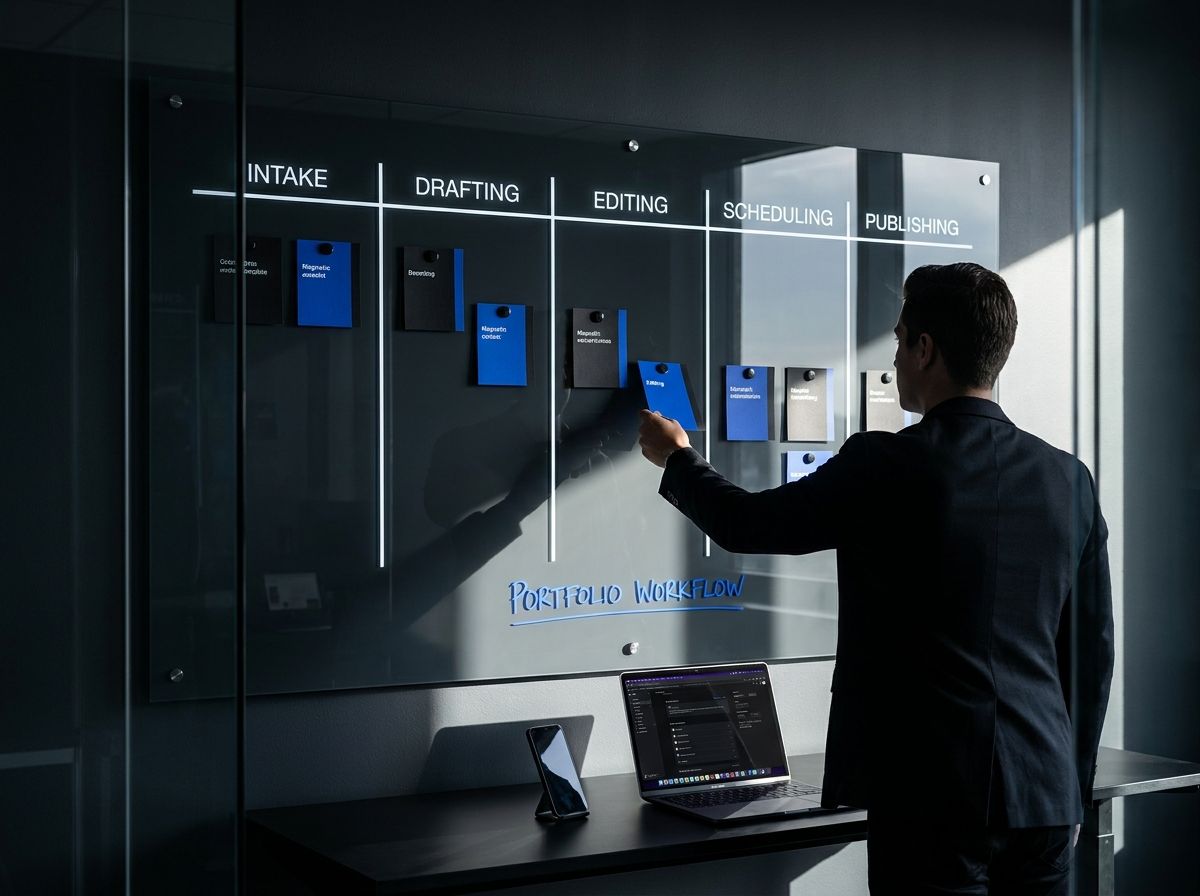
Build your multi-brand workflow like a production line
Picture your day like a conveyor belt. You're not trying to do everything yourself at once, you're trying to keep work moving through stages.
For 5+ brands, the stages need to be consistent. The content details change. The workflow doesn't.
Here's a workflow that holds up when you're juggling multiple niches and still want brand consistency.
Stage 1: Intake and planning (one queue)
You need one source of truth for what's coming next.
Make a single queue called "This week's work" and drop every brand's planned tasks into it. The goal is not to manage everything perfectly. It's to stop you from hitting that "wait, what was I doing again?" moment across five brands.
Each task in that queue gets:
- Brand name
- Topic or offer angle
- Desired outcome (email signups, sales page traffic, comments, whatever you care about)
- Due date
- Status (idea, drafting, editing, scheduled, published)
Do this and you stop treating content ops like vibes.
Practical takeaways:
- Keep the due dates real. If you can't publish by Friday, don't set Friday.
- If a task doesn't have an outcome, it's not a task. It's a thought.
Stage 2: Voice lock (before you draft)
This is where brand voice gets protected.
Before you write a word, open the brand voice sheet and answer three questions in plain language:
- Who is this for this week?
- What do they need to do or believe after reading?
- What tone should run through every paragraph?
You're not writing the post yet. You're loading the voice settings.
This is also where brand consistency starts. Your voice sheet becomes the guardrail that stops your brain from defaulting to your personal style.
A small habit that cuts editing time: write your "do" and "avoid" words as short lists. Not long essays.
Example (write yours, don't copy mine):
- Use: "here's the move," "quick test," "real-world example," "you can do this today."
- Avoid: "revolutionary," "game-changing," "unlock," "journey."
You'd be surprised how much this shrinks your edit time later.
Stage 3: Drafting (one template per brand)
Now you draft.
Use the same structure for every draft in that brand for a while. You can evolve it later, but early on, consistency beats novelty.
A simple drafting template might be:
- Hook: one specific moment or claim
- Proof: one example or mini case
- Instruction: 3 steps or a checklist
- Close: a next action that matches the offer
For multi-brand workflow, the key is that the template lives per brand, not per you. Keep one template across all brands and your writing drifts toward your default voice. Keep one template per brand and the voice gets reinforced each time you open it.
Stage 4: Edit in two passes
Editing is where most founders accidentally erase voice.
Pass one is for voice and clarity. Pass two is for channel formatting. If you collapse both into a single session, your brain starts optimizing for "good enough" instead of brand-right. It's like ironing a shirt while it's still on the hanger. Technically possible. Never comes out right.
A two-pass edit looks like this:
Pass 1 (voice):
- Does it sound like the brand voice sheet?
- Are there any phrases that belong to a different brand?
- Did generic filler sneak in?
Pass 2 (channel):
- Does this fit the channel's length and format?
- Are the links and CTAs correct?
- Is the first line still strong after trimming?
Practical takeaways:
- Don't edit for SEO in pass one. Do it in pass two.
- Don't change tone in pass two. Tone should already be locked.
Stage 5: Workflow automation (publish without thrash)
This is where workflow automation earns its keep.
The goal is not to automate everything. The goal is to strip out the repetitive steps that cause errors.
Common automation wins for multi-brand workflow:
- Auto-create a "scheduled" post for each channel from your master draft
- Auto-fill UTM parameters and tracking placeholders
- Auto-generate a channel-specific title or first-line variation
- Auto-flag missing assets (images, links, CTA)
Even if you're handling this manually today, plan it like it's automated. That mindset keeps the workflow clean.
If you're evaluating a tool stack, make sure it supports:
- Brand-specific templates
- A single content record that can fan out to multiple channels
- A review step you can't accidentally skip
This is how you get speed without bleeding brand consistency.
Use "content ops" to stop context switching from stealing your voice
You can write. You can publish. But multi-brand workflow breaks the moment you keep bouncing between contexts.
Context switching is expensive. You feel it as mental friction and you see it as tone drift.
Content ops is how you buy that energy back.
Create brand clusters, not just brand lists
If you have 5+ brands, you probably have overlaps. Maybe two brands target the same kind of buyer. Maybe two share similar objections. Maybe one is "problem-aware" and another is "ready-to-buy," but the audience language is close enough to reuse.
Cluster your brands by audience and messaging patterns, not by niche category.
Why? Because your brain can pull the same "thinking" notes across clustered brands without rebuilding from zero.
Practical takeaways:
- Cluster by buyer language (what they say when they're stuck).
- Cluster by offer type (audit, course, service, membership).
- Cluster by content goal (education, proof, conversion).
Then your workflow automation can reuse parts of the plan while still keeping each brand's voice separate.
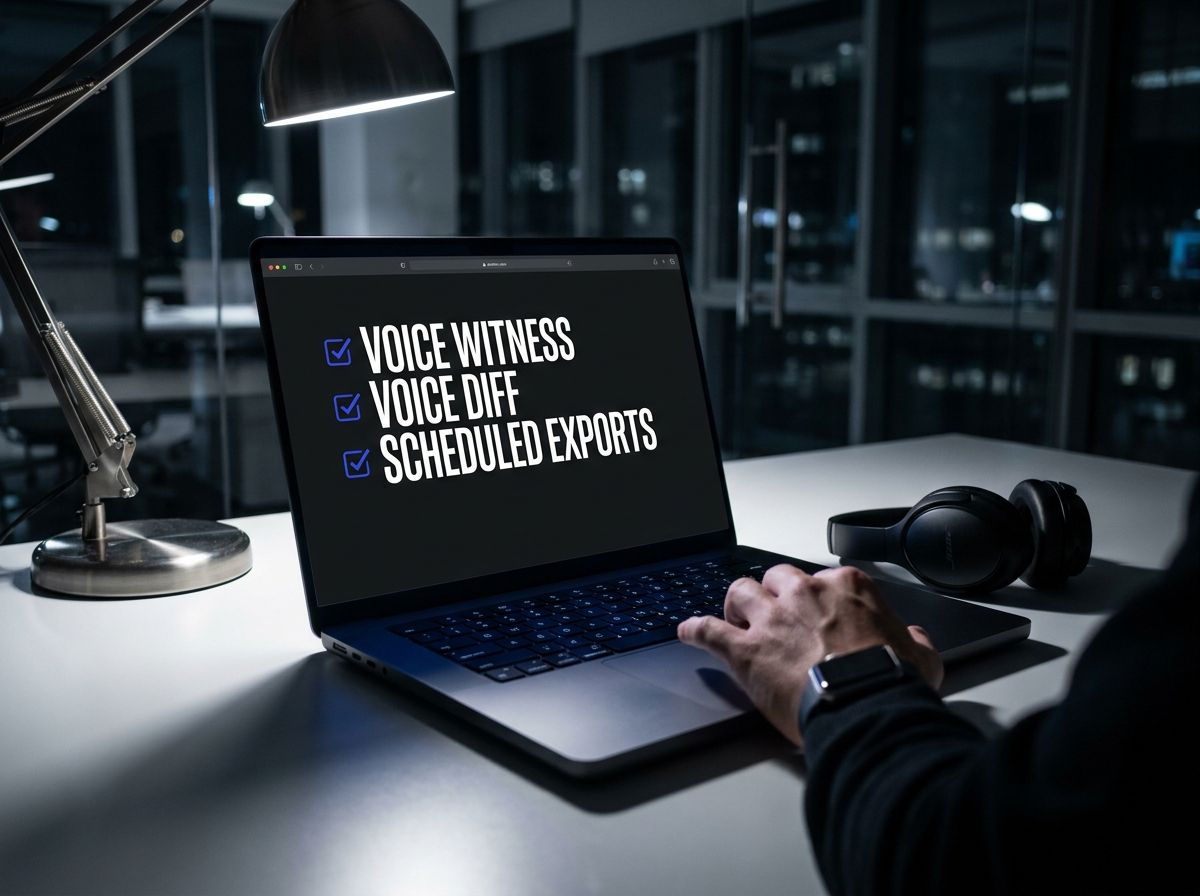
Write a "voice diff" checklist for each brand
This is my favorite trick because it's simple and it works (I've seen founders skip this and regret it within a week).
For each brand, create a short checklist that answers: "How is this brand different from my other brands?"
Your checklist should include:
- Preferred phrase patterns (how they start sentences)
- Proof style (stories, stats, examples, receipts)
- CTA style (soft invite vs. direct ask)
- Words they never use
When you draft, you check your "voice diff" before you publish. Skip this and your writing becomes a remix of your own habits.
Keep one "master draft" and fan out, but only after voice is locked
Repurposing is where voice often gets lost.
If you start repurposing before voice is locked, you'll copy a voice mistake into every channel. So do it in this order:
- Master draft (voice locked)
- Channel formatting (length, structure, links)
- Repurpose variants (angle tweaks, not tone changes)
Yes, it takes a little more discipline up front. It saves hours later.
Turn your edits into reusable rules
You will revise. That's normal.
But capture what you learn. After each editing round, write one short rule per brand. Not a diary entry. A rule.
Examples:
- "For Brand A, every post needs a concrete example within the first 150 words."
- "For Brand B, avoid long paragraphs. Keep sentences under 18 words."
- "For Brand C, the CTA should be one sentence with a verb, not a paragraph of encouragement."
Over time, those rules become your brand voice sheet 2.0. This is how you scale without losing yourself.
A publishing rhythm that keeps 5+ brands from eating your week
You don't need to publish every day for every brand.
You need a rhythm you can repeat when you're busy, tired, or both.
Here's a rhythm that holds up for lean teams and solo founders running multiple niches.
Pick one "ship day" per brand
Choose one day each week when that brand moves from scheduled to published.
If all brands publish on the same day, you get a traffic jam. If they're scattered randomly, you don't build momentum. Ship day creates a pattern your brain can actually follow.
Practical takeaways:
- Set ship days early, even if you adjust them later.
- Keep ship days consistent for at least 3 weeks before you change anything.
Use a weekly content ops checklist
This is your weekly "don't forget" list. Keep it short.
- Intake queue reviewed (what's coming, what's slipping)
- Voice sheets opened for any brand with a draft in progress
- One editing pass scheduled for each draft
- Channel assets checked (links, images, CTA)
- Automation run (or at least "scheduled export" completed)
Do this and you stop relying on memory.
Memory is where voice goes to die.
Batch by stage, not by brand
Most founders batch by brand: Monday is Brand 1, Tuesday is Brand 2.
That feels organized. It also keeps you context switching.
Batch by stage instead.
- Monday: voice lock and drafting across all brands that need it
- Tuesday: editing across those same brands
- Wednesday: channel formatting and scheduling
- Thursday: review and light tweaks
This is a multi-brand workflow that respects how your brain actually works. You're not switching audiences every hour. You're moving through the same steps across the whole portfolio.
Keep a "voice witness" document
When you publish 5+ brands, you need one place to verify you didn't drift.
A voice witness document is a small set of examples:
- The best-performing post for each brand (by engagement or conversions)
- One post you wrote that sounds exactly right
- One post that drifted (and a note on why)
Skim the voice witness for a brand before you draft new content for it. It's like tasting the sauce before you add more salt. You catch drift early.
How to measure brand consistency without obsessing
You might be thinking, "This is great, but how do I know it's working?"
You measure outcomes, but you also measure consistency.
Brand consistency shows up in:
- Response quality (comments that sound aligned with the brand)
- Conversion behavior (clicks to the right offer, not random clicks)
- Repeat engagement (people returning to that brand's content style)
Use simple tracking, not dashboards that make you feel like a robot.
A practical approach:
- Pick one metric per brand for the next 30 days. Examples: email signups per post, add-to-cart rate, or reply rate.
- Track one "voice quality" signal. Examples: number of revisions needed before publishing, or how often you're changing tone after pass one.
- Review weekly. If voice quality is slipping, fix the workflow stage, not the writer.
This is the difference between content ops and content chaos.
FAQ
FAQ: How do I keep my brand voice consistent across 5+ brands?
Keep a one-page brand voice sheet per brand and lock tone before you draft. Use a "voice diff" checklist to remind you what makes each brand different. Then edit in two passes: voice first, channel formatting second.
FAQ: What should my multi-brand workflow automation handle?
Automate the repetitive parts that cause errors: scheduling exports, UTM parameters, missing asset checks, and channel formatting drafts. Don't automate the voice decisions. Voice should come from your brand voice sheet and your editing passes.
FAQ: How do I avoid content ops overwhelm when everything is due at once?
Use one queue for intake and one ship day per brand. Batch by stage (voice lock, draft, edit, schedule) instead of batching by brand. If a task has no outcome, it doesn't go into the queue.
FAQ: Is it better to repurpose one master draft or write separately for each channel?
Write one master draft after voice is locked, then format for each channel. If you repurpose before tone is correct, you'll copy the mistake everywhere. Channel variations should change structure and angle, not the core voice.
Closing: you're not behind, you're overloaded
Elena finally stopped switching tabs. She picked one brand, opened its voice sheet, and rewrote the first paragraph of the draft. Ten minutes, start to finish.
The rest of the work got easier after that, because her brain wasn't guessing what the brand should sound like. It was following a system.
If you run 5+ brands, your voice is not a magic trick. It's a resource. Protect it with content ops, workflow automation, and a process you can repeat on a normal Tuesday.
Next step: pick one brand this week and build its brand voice sheet. Run one draft through the pipeline stages above. Ship it. Keep the rules you learn. That's how multi-brand workflow stops feeling like survival and starts feeling like work you can trust.
Join the conversation
Subscribe to comment
Join the Ziggyloo family newsletter to leave a comment — and get gentle learning tips and community stories in your inbox. No spam, unsubscribe anytime.